I have always been fascinated by language.
It is, in a way, what drew me into the patent world in the first place. A patent is an attempt to define something new using nothing but words, to draw the precise boundary of an invention in language so exact that it holds up in court years later. Patent people spend their careers wrestling with that problem: how do you say exactly what you mean, no more and no less? Most of our work, when you strip it back, is defining things with language.
So you can imagine how the last few years have felt for me.
Something genuinely new is happening. People have started talking to systems in plain human language. Systems have started talking back to people in plain human language. And – this is the part I keep coming back to – systems have started talking to other systems in human language too. The interface that used to require a developer, an integration, a schema, is now increasingly just words. For someone who has spent twenty years thinking about how meaning gets encoded in language, watching machines negotiate meaning with each other in our own words is close to magical.
We are only at the very beginning of this. But even now, you don't need much imagination to see where it leads.
From micro-decisions to macro-decisions
Patent work is a long chain of decisions, big and small. Is this prior art relevant? Does this feature read on the claim? Is this family worth maintaining? Where are the white spaces in our portfolio? For most of IPRally's history, our job has been to make the small decisions faster and better – to move the professional, as I have put it before, from the engine room up to the driver's seat.
What is changing is that AI is starting to climb that same staircase. First it helped with the micro-level decisions. Now it is reaching toward the macro level: forming high-level plans, sequencing tasks, deciding what to look at next and why. The work is moving from "answer this question" to "achieve this goal."
If you want a preview of how fast this can move, look at what has happened to coding agents in the last six months. Not years – months. They went from autocomplete to genuinely planning, executing, and checking multi-step work with very little hand-holding. I don't think IP is special enough to be exempt from that curve. The same trajectory is coming for patent and IP work, and it is coming quickly.
Two doors: the API and the MCP
This is why our recently released API and our upcoming MCP support matter more than they might first appear. They are not just two more integration checkboxes. They are two different doors into the same future, and we are opening them deliberately.
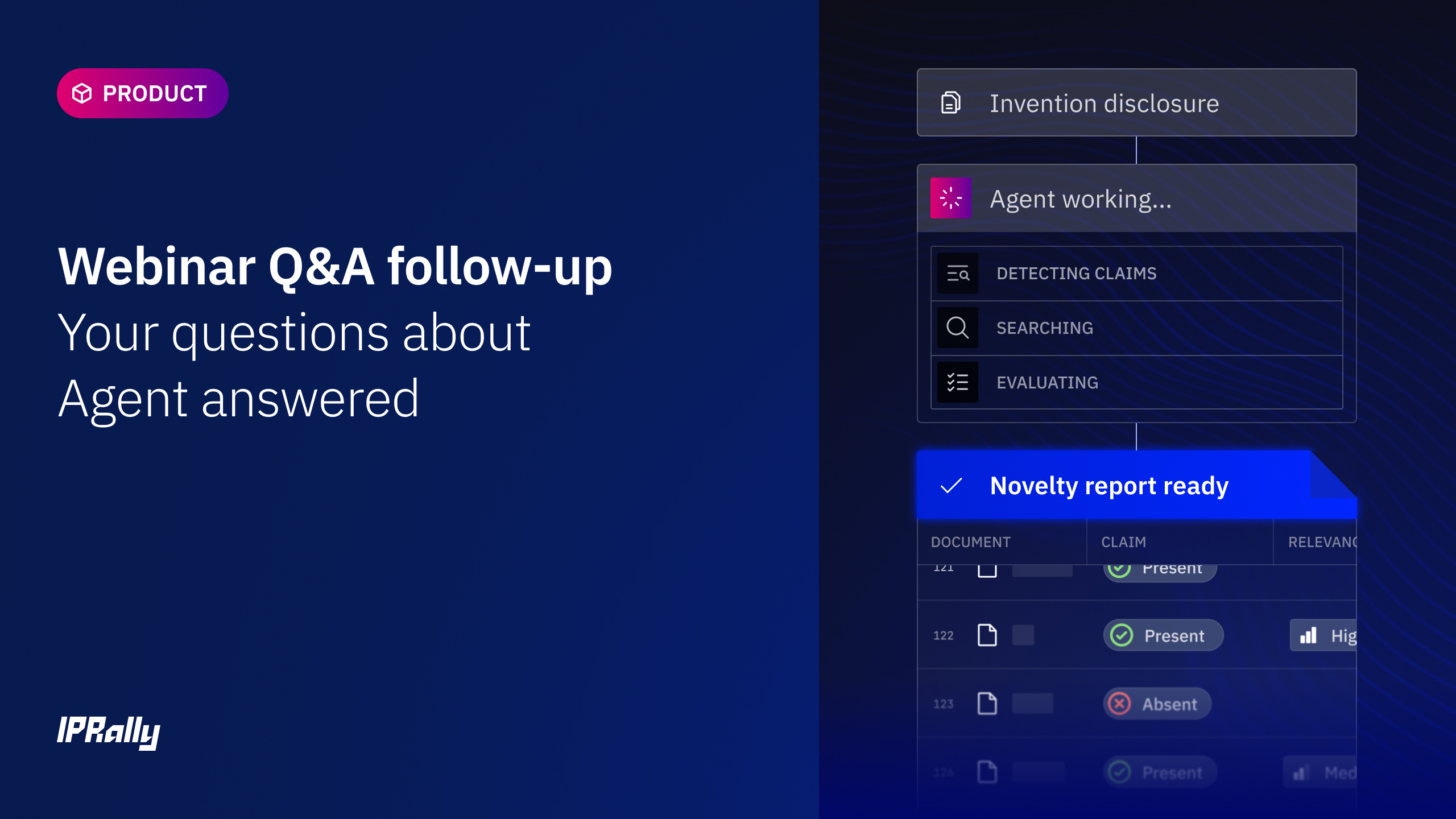
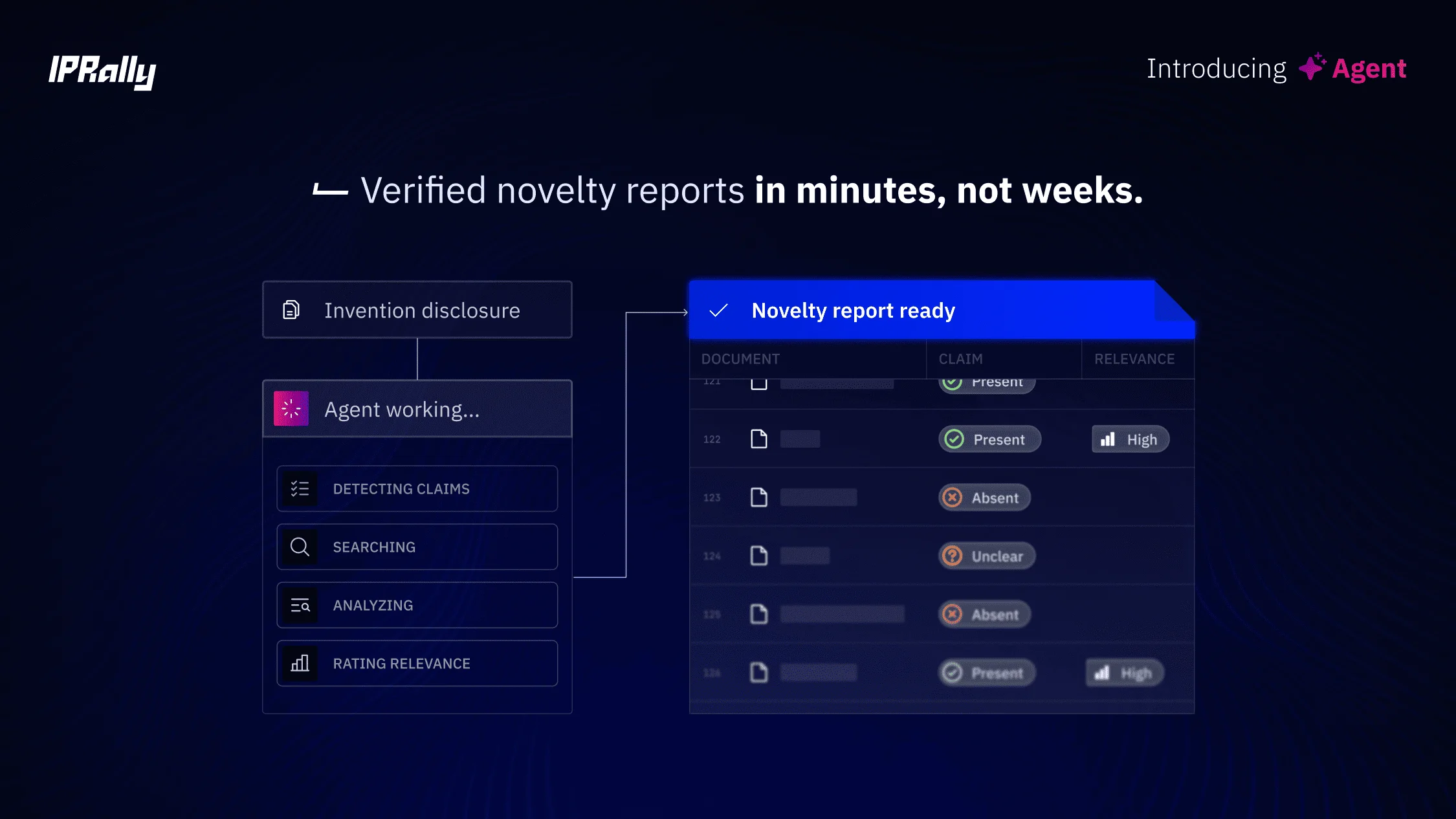
The API is about efficient system-to-system integration. It lets IPRally's best-in-class search slot directly into existing IP processes and pipelines. Invention disclosures flowing in, high-quality results and analysis flowing out, without anyone copy-pasting between tools. It is how you enhance and automate the workflows that already exist.
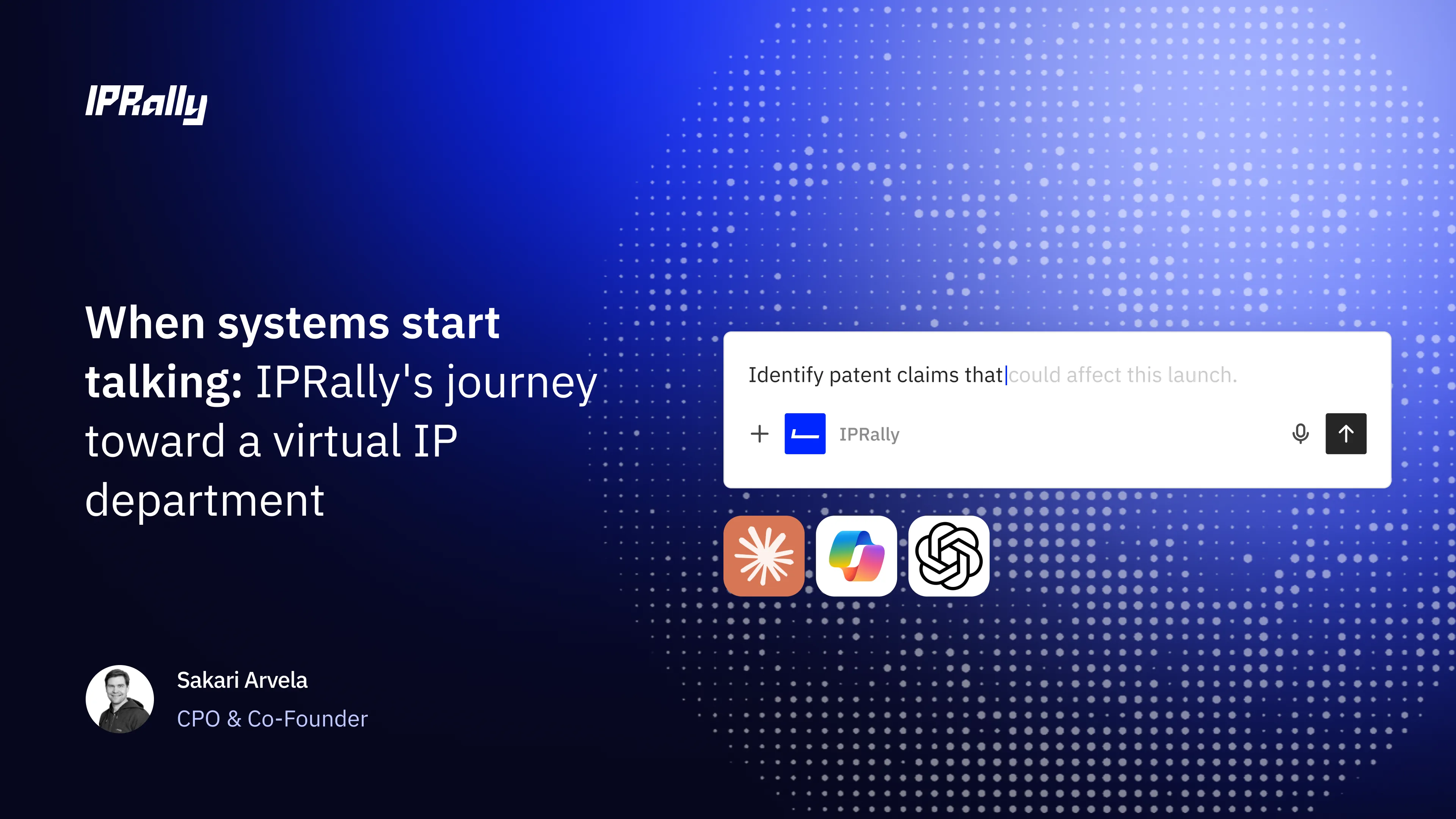
The MCP is about something a step further. It lets users plug IPRally straight into their own agents as a trusted tool. In the near term, that means your assistant can call on IPRally the moment a patent question comes up, in the middle of whatever else it is doing. In the longer term, it is the foundation for fully agentic workflows – intelligent IP data flows, insights surfaced without being asked, and challenging, brainwork-heavy tasks completed end to end.
I am seeing the pull for both already, and not from just the usual early-adopter fringe. Large enterprises are building their own internal AI layers and want IPRally to serve as the patent search and intelligence engine inside them, queried by their systems rather than clicked through by their people. Patent attorneys want to connect their AI assistants to IPRally, hand over an invention disclosure, and get a novelty assessment back into the same conversation where they are already working. Even patent offices are exploring pulling external search into their examination tools. The direction of travel is unmistakable: in many use cases the UI matters less, and the quality and connectivity of the underlying intelligence matters more.
The IP department that is always on
Follow this far enough and you arrive at an idea we have started drawing out internally as a virtual IP department, or, from the technical viewpoint, an agentic IP operating system.
Picture a corporate IP function that is on 24 hours a day. Strategy defined, tactical goals set, operating rules in place, and then an agentic system that executes against all of it autonomously, doing whatever is in the genuine best interest of the company: watching competitors, flagging risks, spotting white space, preparing the groundwork for filings, keeping the portfolio healthy. Not as a dashboard someone has to remember to open, but as a tireless colleague that simply does the work.
I want to be very clear about the human side of this, because it is the part that matters most to me. Human supervision and goal-setting do not disappear in this picture. They become more important, not less. Someone has to set the strategy, define what "good" means, and supply the taste, nuance, and vision that no system has. What changes is that people get to move up to those higher-level roles. There is a control room, and humans are in it. The machine handles the relentless, repeatable substance work; people handle judgment and direction.
Keeping the gaps small
I would be dishonest, though, if I painted only the comfortable version of this.
We also have to prepare for a future where, in many areas, AI agents simply do the work better than us – better on accuracy, better on consistency, better on speed, across every measure we care about. In those areas the human role becomes filling the gaps the machines leave behind.
I think IPRally's real job, in the long run, is to keep those gaps as small as possible. Not so that humans are squeezed out, but so that we are never left dependent on systems we cannot match or check, so that we remain the ones in charge, and don't quietly become slaves to the AI we built. Going back to the engine room in chains.
The way you stay in control of a powerful tool is by being excellent at the thing it does, not ignorant of it. That does not mean you should be in direct control of every detail anymore – but that you can trust the tool that handles those details, and have means for digging into and understanding those details when needed. AI harnessed the right way can achieve exactly that.
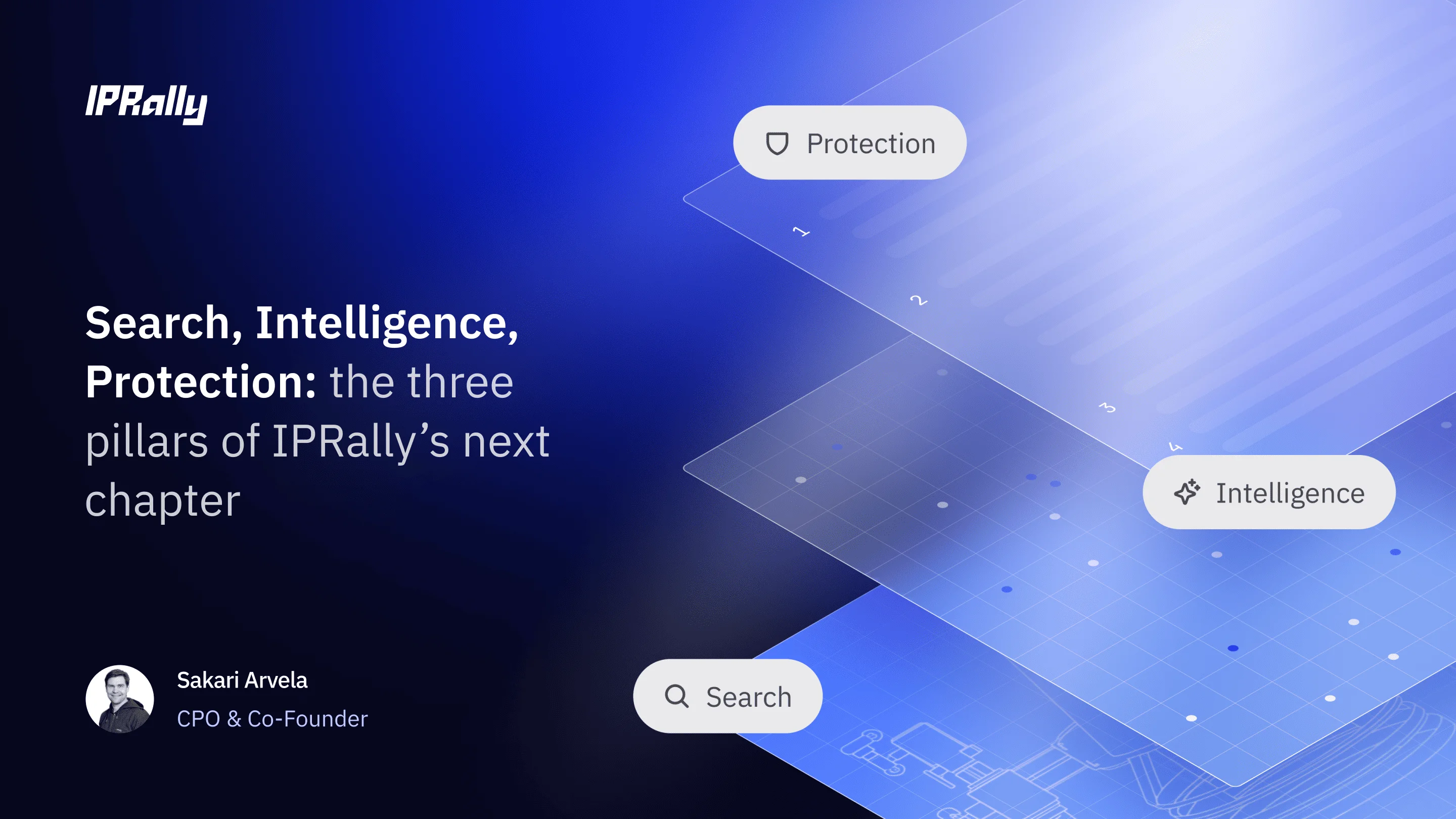
The first gap we are filling is the one we know best. We are making best-in-class patent search and review available to systems and agents, so they can do the repeatable, traditionally brainwork-intensive work reliably and at scale. That is the foundation everything else stands on. If the search and the analysis underneath are not trustworthy, no amount of agentic orchestration on top will save you. Get that right, and you have given every agent in this new world a tool it can actually rely on.
Just getting started
When I used AI-generated text in my conference talks back in 2019, the fun was in the reveal – watching the room realize a machine had written the patent-sounding paragraph on the screen. That trick stopped working years ago, because the world caught up. The same thing is about to happen to a lot of assumptions about how IP work gets done.
We are at the very start of the era where people talk to systems, systems talk to systems, and systems talk back to people, all in our own language. For a company built on the idea that patents are fundamentally about language, I cannot think of a more exciting place to be standing.
Less searching, more answers – now for your agents too.
Try our MCP
IPRally Search is now available as an MCP connector within your favourite AI assistants, in preview and free with your existing license. Connect it once, and the AI assistant you already work in – Claude, ChatGPT, Gemini, Copilot, or your company's own agents – can run IPRally searches for you, in the middle of the conversation.
For instructions on how to setup the MCP for your tool please check out our help centre. For those of you that aren't IPRally users, you can book a demo with us to see the MCP in action and arrange a managed trial with our team.
.webp)